
Program Description
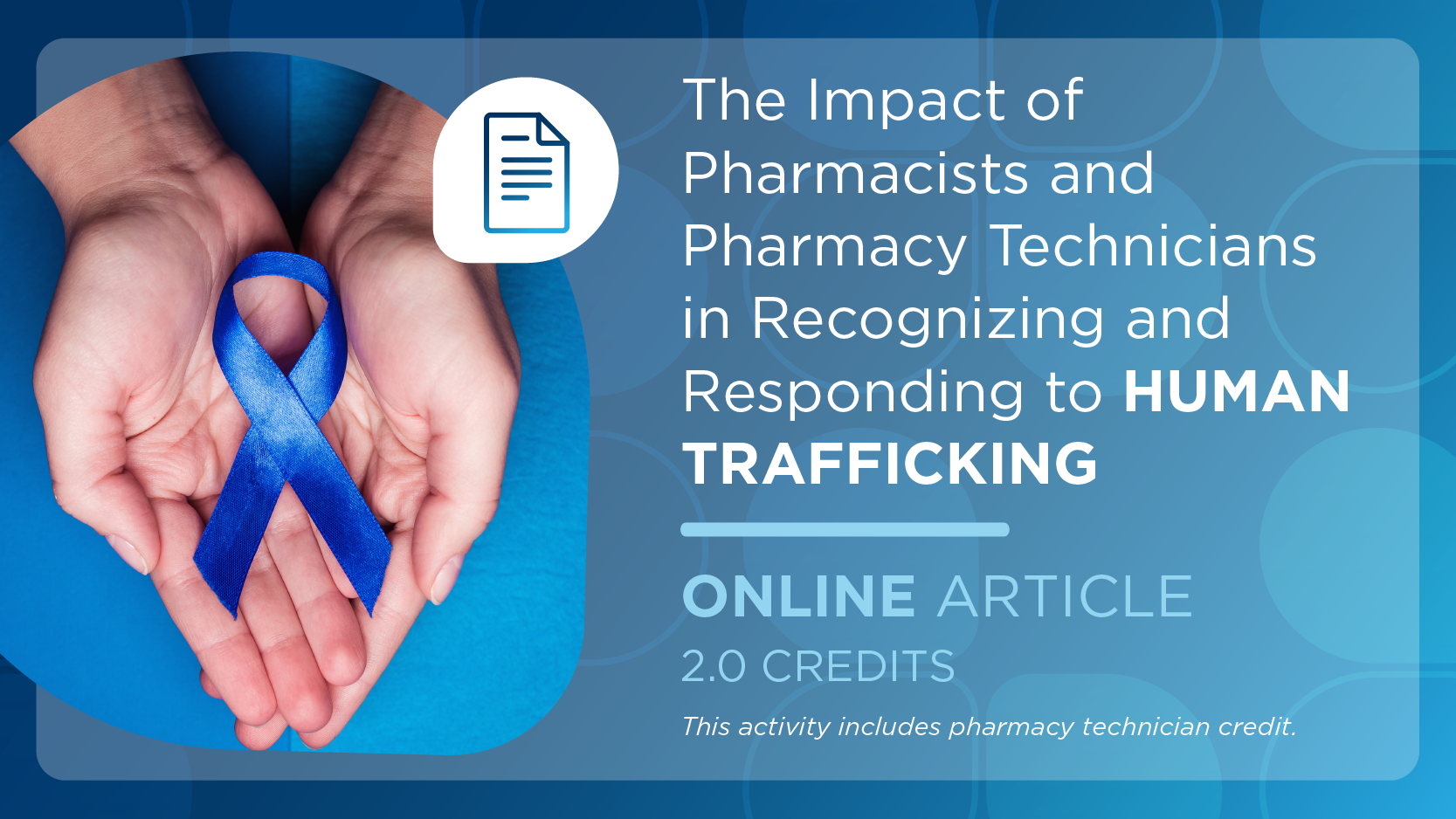
Human trafficking can take many forms, but 2 primary forms encountered most frequently in the United States are sex trafficking and forced labor. Approximately 50% of people being trafficked seek health care services. These individuals most often present to community clinics or emergency departments. As frontline health care providers, pharmacists and pharmacy technicians may encounter victims of human trafficking and should be informed about approaches to aid victims safely and sensitively. This article will review the legal definition, types, health-related impact of human trafficking, and red-flag indicators of potential human trafficking so pharmacists and pharmacy technicians are equipped to identify and support victims. Patient-centered approaches through compassionate language, cultural sensitivity, and removing other biases will also be reviewed.
Target audience: Pharmacy Technicians
Type of activity: Knowledge
Release date: August 17, 2023
Expiration date: June 30, 2026
Time to complete activity: 2.0 hours
Fee: Free
Educational Objectives
At the completion of this activity, participants will be able to:
- Define the scope and legal elements of human trafficking in the United States
- Detail the primary types of human trafficking and health-related impact for victims
- Recognize signs an individual may be a victim of human trafficking and tactics traffickers use to control victims
- Outline approaches for pharmacists and pharmacy technicians to responsibly and safely intervene and report instances of human trafficking
GET STARTED WITH THIS PROGRAM:
Register now to gain access to this program.
Create AccountAlready Registered? Login Here