
Program Description
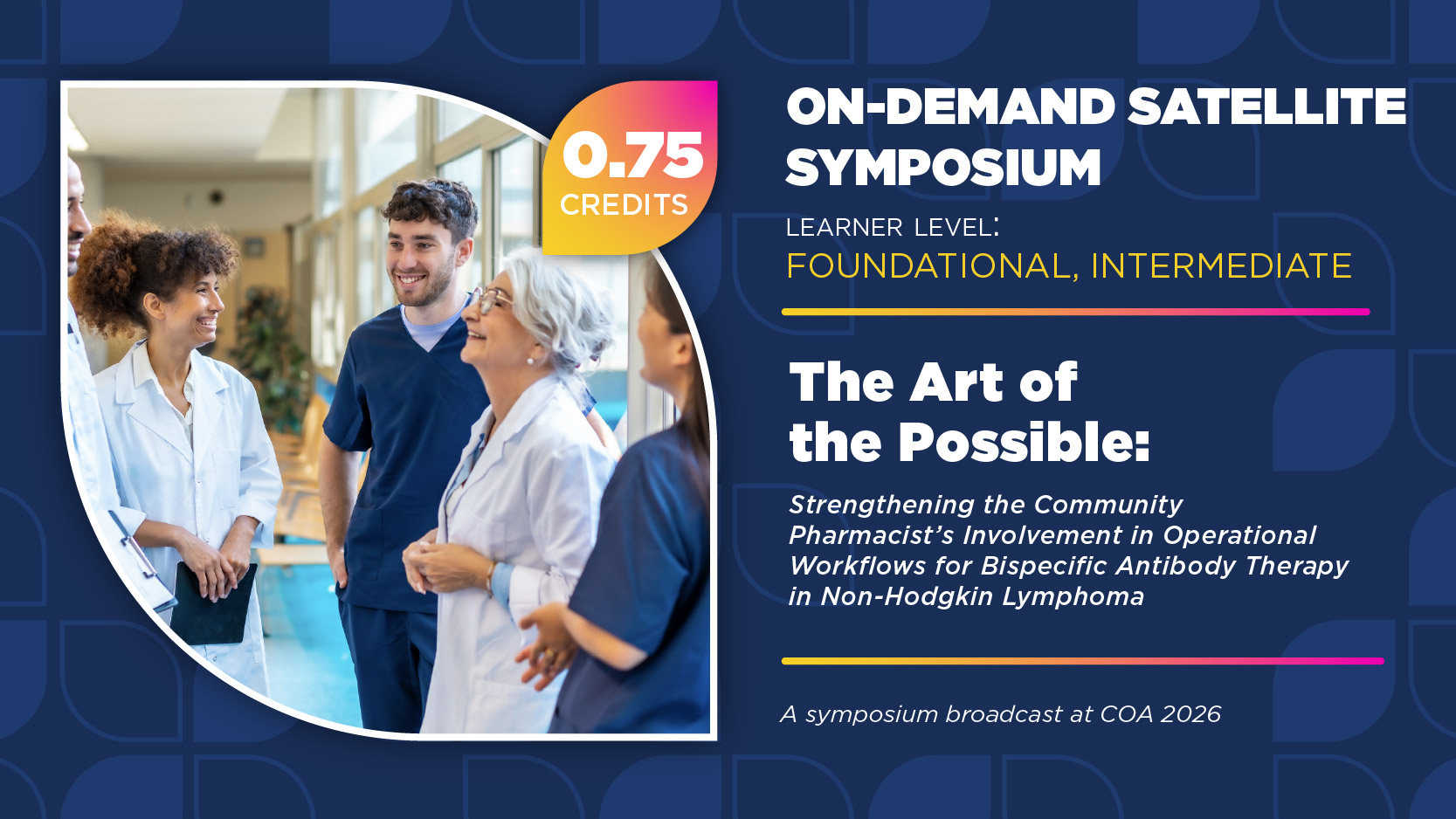
The expanding
landscape of bispecific antibodies (BsAbs) has altered treatment decisions and
selection in the management of relapsed/refractory B-cell lymphomas. BsAbs
offer an "off-the-shelf" alternative to CAR T-cell therapy,
necessitating an in-depth understanding of updated treatment algorithms where
BsAbs are increasingly being integrated into the third-line setting and
investigated for earlier interventions. Oncology pharmacists are now at the
forefront of this transition, navigating complex sequencing decisions and
addressing real-world operational barriers as administration moves from
specialized academic centers into community oncology practices. Key operational
considerations include the development of institutional protocols for step-up
dosing and managing unique toxicities like cytokine release syndrome (CRS) and
ICANS, as well as the implementation of electronic health record (EHR) builds,
REMS compliance, and standardized compounding workflows. This session will
explore the clinical evidence for FDA-approved BsAbs, emerging combination
therapies, and multidisciplinary strategies for toxicity grading and patient
counseling. To facilitate the practical application of these concepts, the
program utilizes interactive, real-world patient cases and faculty-led
discussions to help attendees manage challenging scenarios encountered in daily
pharmacy practice.
Target audience: Oncology pharmacists
Type of activity: Application
Release date: May 12, 2026
Expiration date: May 12, 2027
Learner level: Foundational, Intermediate
Time to complete activity: .75 hour
Fee: Free
Educational Objectives
At the completion of this activity, participants will be able to:
- Group current bispecific antibodies (BsAbs) and evolving sequencing pathways into clinical practice for relapsed/refractory lymphoma management, enabling efficient BsAbs operationalization and improved access in community settings
- Construct multidisciplinary approaches to adverse effect recognition, prophylaxis, and management strategies in community settings, ensuring that community oncology pharmacists play a central role in patient education, toxicity grading, and continuity of care
- Apply the best practices for community pharmacist-led interventions, including order set builds, compounding/verification, infusion workflows, and electronic health record integration to reduce error risk and ensure patient safety
GET STARTED WITH THIS PROGRAM:
Register now to gain access to this program.
Create AccountAlready Registered? Login Here