
Program Description
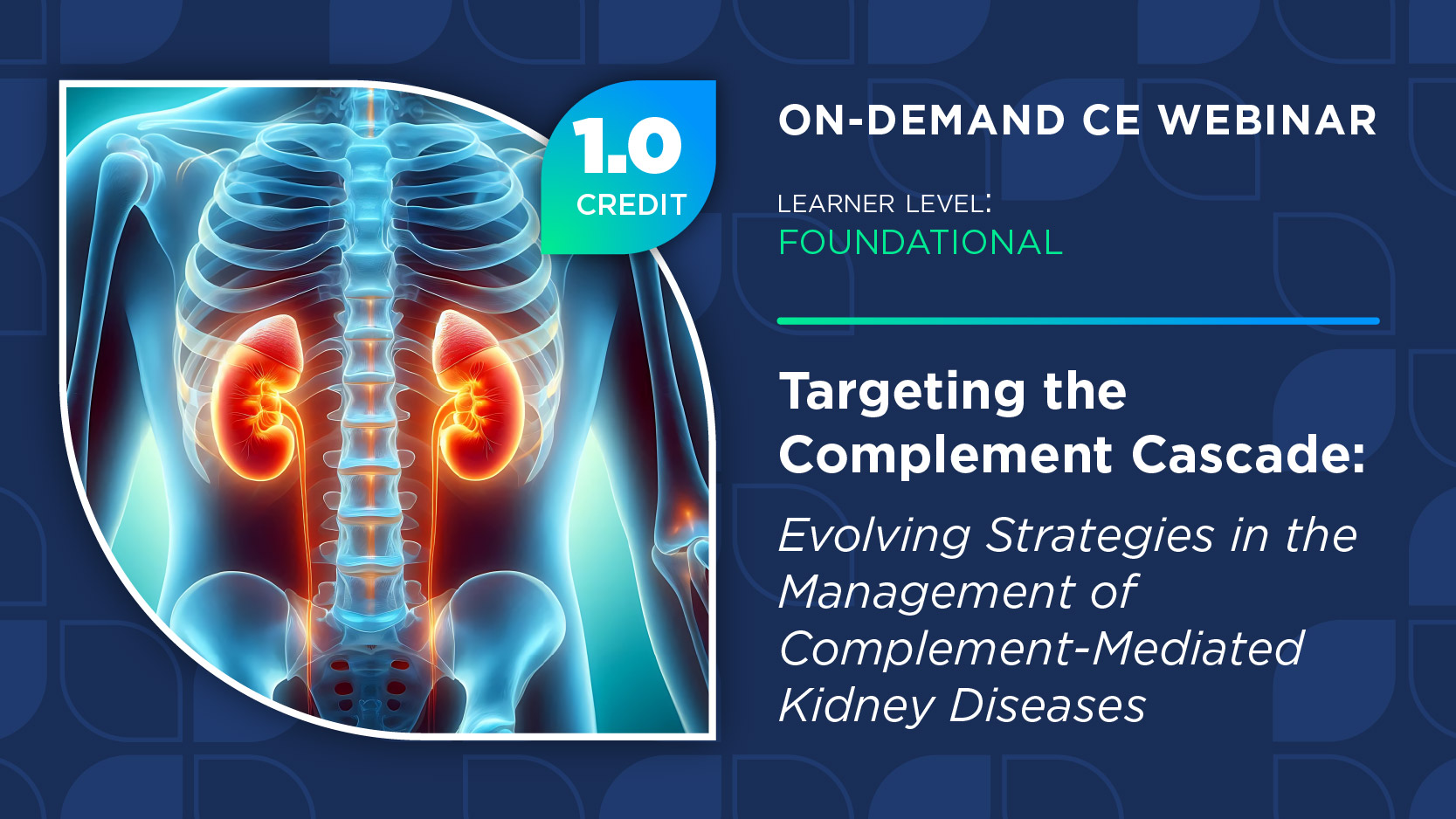
Complement-mediated kidney diseases (CMKD), including atypical hemolytic uremic syndrome (aHUS) and C3 glomerulopathy (C3G), are progressive conditions stemming from dysregulated complement pathway activation. Often, patients with CMKD experience significant clinical burden, with rapid progression to end-stage kidney disease (ESKD). This severe prognosis has prompted a shift from conventional immunosuppressive strategies that do not address the underlying cause of the disease towards targeted complement inhibitors. While these complement inhibitors are effective, their use and administration introduce critical challenges for pharmacists, including concerns of infection risk management, medication access and prior authorization protocols, and smooth transitions of care. This webinar will detail the complement pathway in CMKD pathophysiology, offering a review of KDIGO guidelines, the latest clinical trial data on current and emerging treatments, and case-based scenarios to support appropriate therapy selection. Key educational pearls, including safety and risk mitigation protocols and medication access considerations, will be highlighted to support the pharmacist's role in optimizing long-term outcomes for patients with CMKD.
Target audience: Ambulatory Care Pharmacist, Health-System
Pharmacist, Specialty Pharmacist
Type of activity: Application
Release date: December 23, 2025
Expiration date: December 23, 2026
Time to complete activity: 1.0 hours
Learner level: Foundational
Fee: Free
Educational Objectives
At the completion of this activity, participants will be able to:
- Explain the pathophysiology and clinical presentation of complement-mediated kidney diseases (CMKD), including atypical hemolytic uremic syndrome and C3 glomerulopathy
- Identify the mechanisms of action, efficacy, and safety profiles of current and emerging complement-targeted therapies
- Determine the pharmacist’s role in facilitating access to therapy, managing risk of infection, and educating patients about long-term treatment considerations
- Apply evidence-based strategies to optimize therapeutic decision-making and multidisciplinary care in CMKD management
GET STARTED WITH THIS PROGRAM:
Register now to gain access to this program.
Create AccountAlready Registered? Login Here