
Program Description
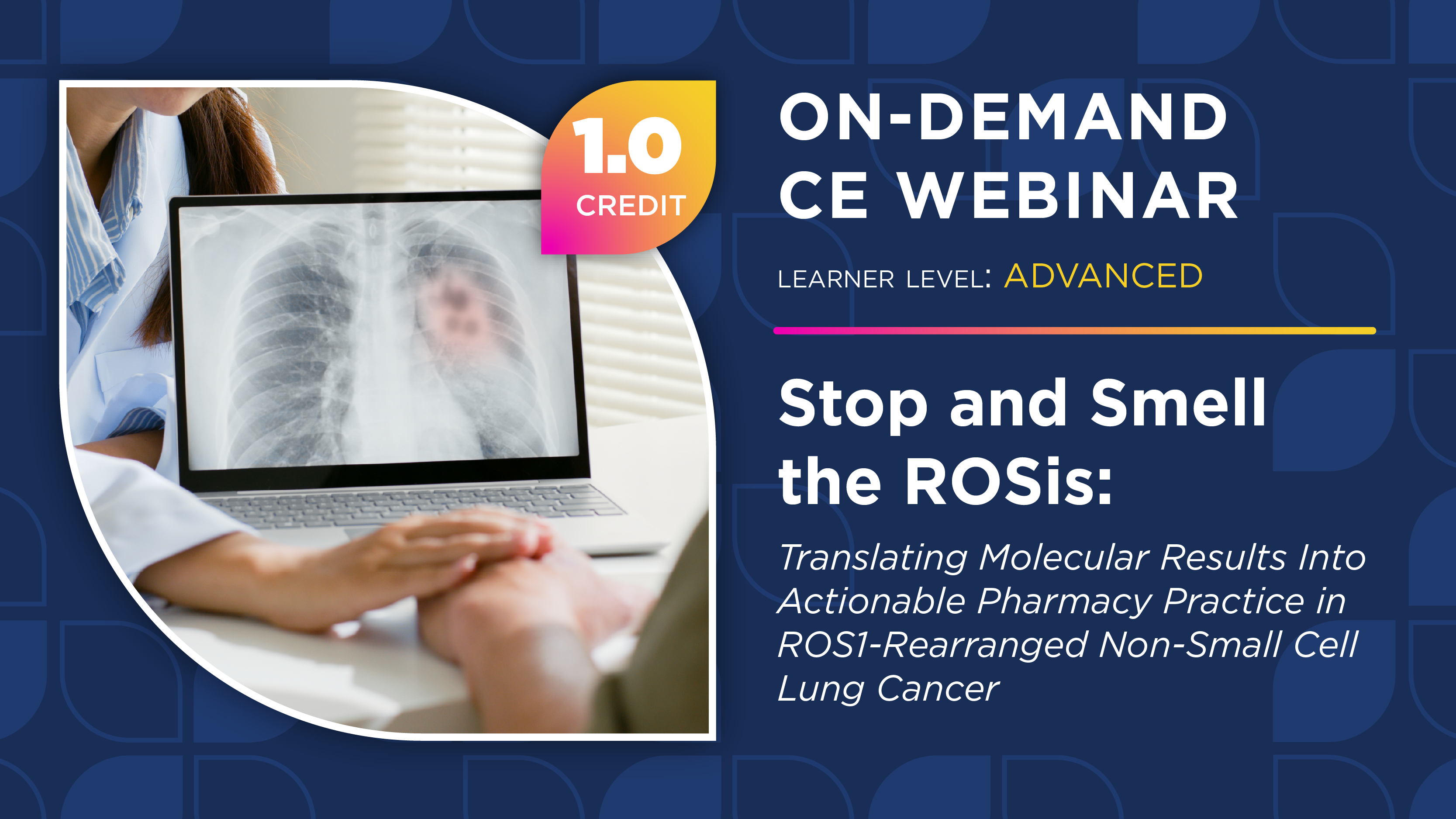
Non‒small cell lung cancer
(NSCLC) management is increasingly defined by precision medicine, and
comprehensive molecular profiling at diagnosis and upon disease progression is
the cornerstone for identifying actionable oncogenic drivers and emerging
resistance mutations. ROS1 rearrangements represent a well-defined yet
uncommon molecular subset, accounting for roughly 1% to 2% of NSCLC cases. The
increasing availability of ROS1-targeted therapies requires that oncology
pharmacists expertly navigate complex molecular testing and targeted therapy
sequencing, particularly for the distinct subset of patients with NSCLC with ROS1
rearrangements. This activity will explore approaches for oncology pharmacists
to operationalize next-generation sequencing data, focusing on interpreting
ROS1 fusions and key resistance mutations to guide optimal treatment selection.
A major focus will address the challenge of treatment sequencing, offering
comparative analyses of first-generation and next-generation ROS1-targeted
therapies based on their efficacy, central nervous system penetration, and
resistance coverage in patients with disease progression. The program will also
delve into mechanism-based toxicity management, providing insights on
interventions and strategies for monitoring and mitigating agent-specific
adverse effects to support the delivery of patient counseling pearls and
improved care throughout the entire NSCLC treatment continuum. Participants
will have the opportunity to examine patient case scenarios and apply
evidence-based sequencing strategies.
Target audience: Oncology pharmacists
Type of activity: Application
Release date: January
30, 2026
Expiration date: January
30, 2027
Learner
level: Advanced
Time to complete activity: 1.0 hour
Fee: Free
Educational Objectives
At the completion of this activity, participants will be able to:
- Examine molecular and resistance testing results to support biomarker-directed selection and sequencing of ROS1-targeted therapies throughout the treatment continuum in non‒small cell lung cancer (NSCLC)
- Analyze the efficacy, safety, and resistance profiles of available and emerging ROS1-targeted therapies to inform individualized selection and sequencing across the NSCLC continuum
- Employ mechanism-driven strategies to anticipate, monitor, and manage toxicities associated with ROS1-targeted therapies to optimize adherence and sustain long-term treatment benefit
GET STARTED WITH THIS PROGRAM:
Register now to gain access to this program.
Create AccountAlready Registered? Login Here