

Program Description
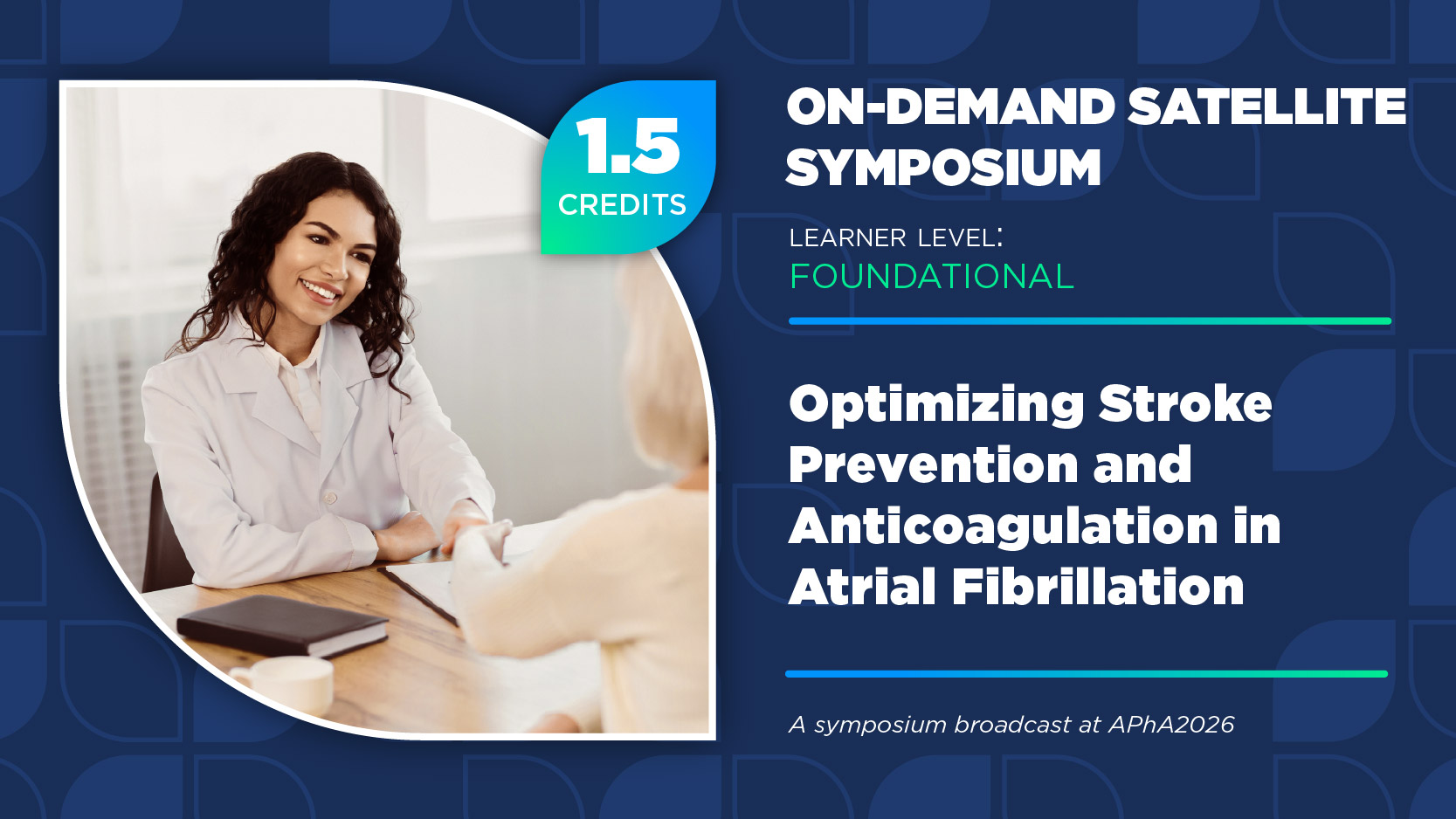
Atrial fibrillation (AFib) represents a critical challenge in clinical practice, as the arrhythmia is a major contributor to stroke. Early detection of AFib provides the opportunity to initiate treatment that could reduce the frequency of complications associated with it. However, management of AFib with direct oral anticoagulants (DOACs), vitamin K antagonists (VKAs), or heparin can increase risk of bleeding and recurrent stroke or another major adverse cardiovascular event. This session will examine factors contributing to undertreatment in AFib with current oral anticoagulants and review the pathophysiology of thromboembolism, the mechanisms, efficacy, and safety of currently approved anticoagulants, and the role of emerging Factor XI/XIa inhibitors with the potential to mitigate bleeding risk. Using case-based applications and pharmacist-patient counseling video vignettes within the session, participants will gain expertise in applying current guideline-based recommendations for stroke prevention, interpreting risk assessment, optimizing therapy selection and dosing, and implementing shared decision-making strategies to construct highly individualized treatment plans that mitigate bleeding risk and ensure optimal outcomes for patients with AFib.
Target audience: Ambulatory Care Pharmacist, Community Pharmacist
Type of activity: Application
Release date: April 10, 2026
Expiration date: April 10, 2027
Learner level: Foundational
Time to complete activity: 1.5 hour
Fee: Free
Educational Objectives
At the completion of this activity, participants will be able to:
- Explain the pathophysiology of thromboembolism and stroke risk in atrial fibrillation
- Compare the mechanisms, efficacy, and safety of approved and emerging anticoagulants, including Factor XI and XIa inhibitors
- Employ guideline-based strategies to reduce stroke and systemic embolism risk, incorporating risk assessment, therapy selection, and patient-centered care
- Construct individualized treatment plans for patients with atrial fibrillation using evidence-based recommendations and shared decision-making
GET STARTED WITH THIS PROGRAM:
Register now to gain access to this program.
Create AccountAlready Registered? Login Here