
Program Description
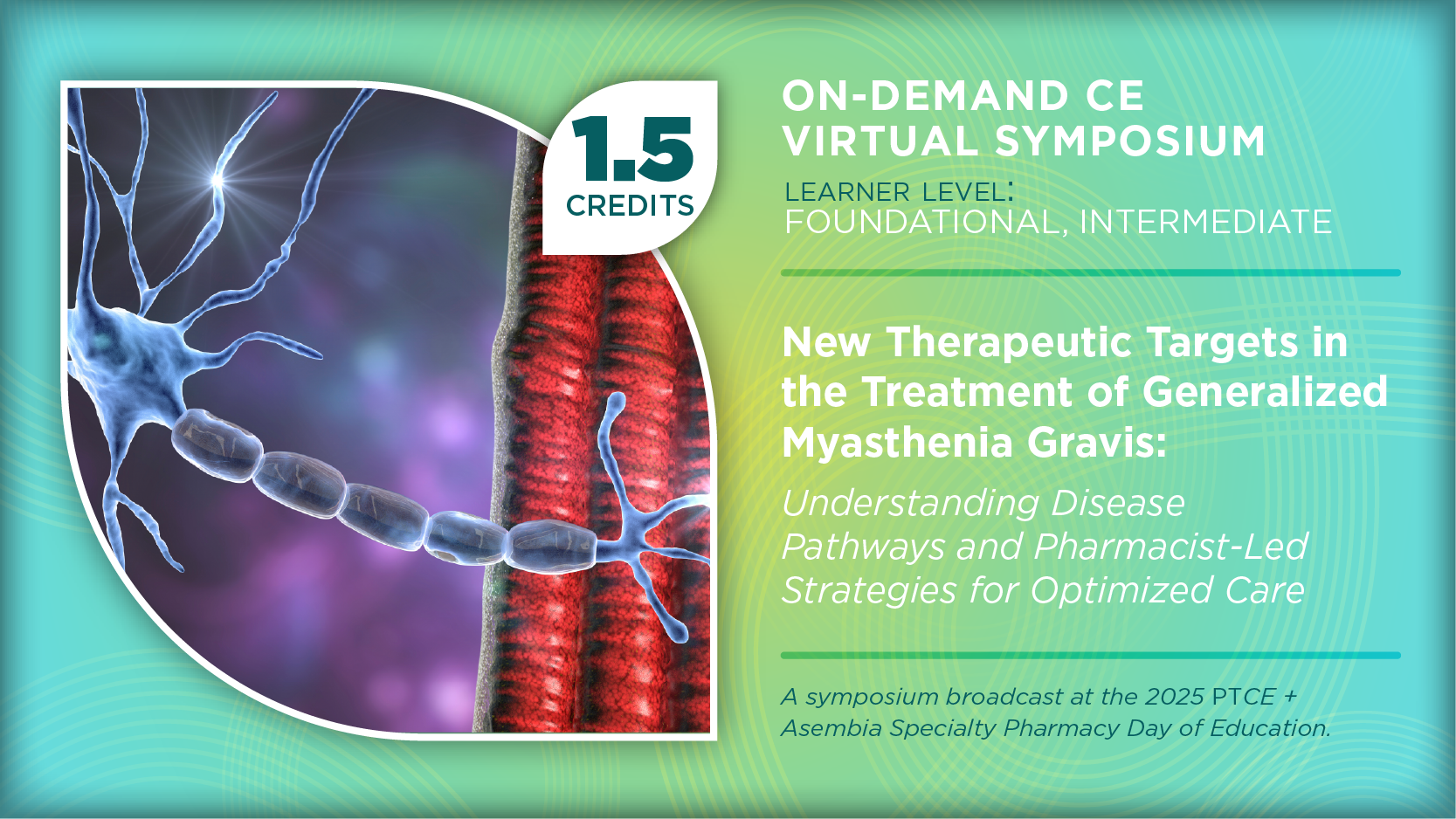
Generalized myasthenia
gravis (gMG) can result in significant disease burden for patients due to
fluctuating, often severe, muscle weakness, debilitating fatigue, and a high
potential for respiratory crises. Research into the pathophysiology of gMG has
uncovered several immunopathologic mechanisms contributing to the disease,
particularly the critical roles of autoantibodies, complement activation, and
the neonatal Fc receptor (FcRn). This session will provide specialty
pharmacists with a foundational understanding of gMG pathophysiology and the
latest approved and emerging agents, including FcRn inhibitors, complement
inhibitors, and B-cell–directed therapies, with a review of their mechanism of
action, efficacy, and safety profiles. Specialty pharmacists must be familiar
with the clinical data and access considerations to ensure timely and
appropriate care for patients with gMG. By reviewing these novel treatments and
detailing the evolving responsibilities of the specialty pharmacist in care
coordination, patient education, adherence monitoring, and adverse effect
management, this session will support specialty pharmacists in successfully
navigating the treatment landscape of gMG. Patient case discussions will also
be incorporated, providing opportunities to apply knowledge of gMG management
and treatment selection to complex, real-world patient scenarios.
Target Audience: Specialty Pharmacist
Type of Activity: Application
Release date: November 21, 2025
Expiration date: November 21, 2026
Learner level: Foundational, Intermediate
Time to complete activity: 1.5 hour
Fee: Free
Educational Objectives
At the completion of this activity, participants will be able to:
- Explain the immunopathologic mechanisms contributing to generalized myasthenia gravis (gMG), including the role of autoantibodies, complement, and the neonatal Fc receptor (FcRn)
- Analyze emerging and approved therapies for gMG, including FcRn inhibitors, complement inhibitors, and B-cell directed therapies, in the context of mechanism of action, efficacy, and safety
- Identify the evolving role of specialty pharmacists in managing gMG, including coordination of care, patient education, treatment adherence, and adverse effect management
GET STARTED WITH THIS PROGRAM:
Register now to gain access to this program.
Create AccountAlready Registered? Login Here