

Program Description
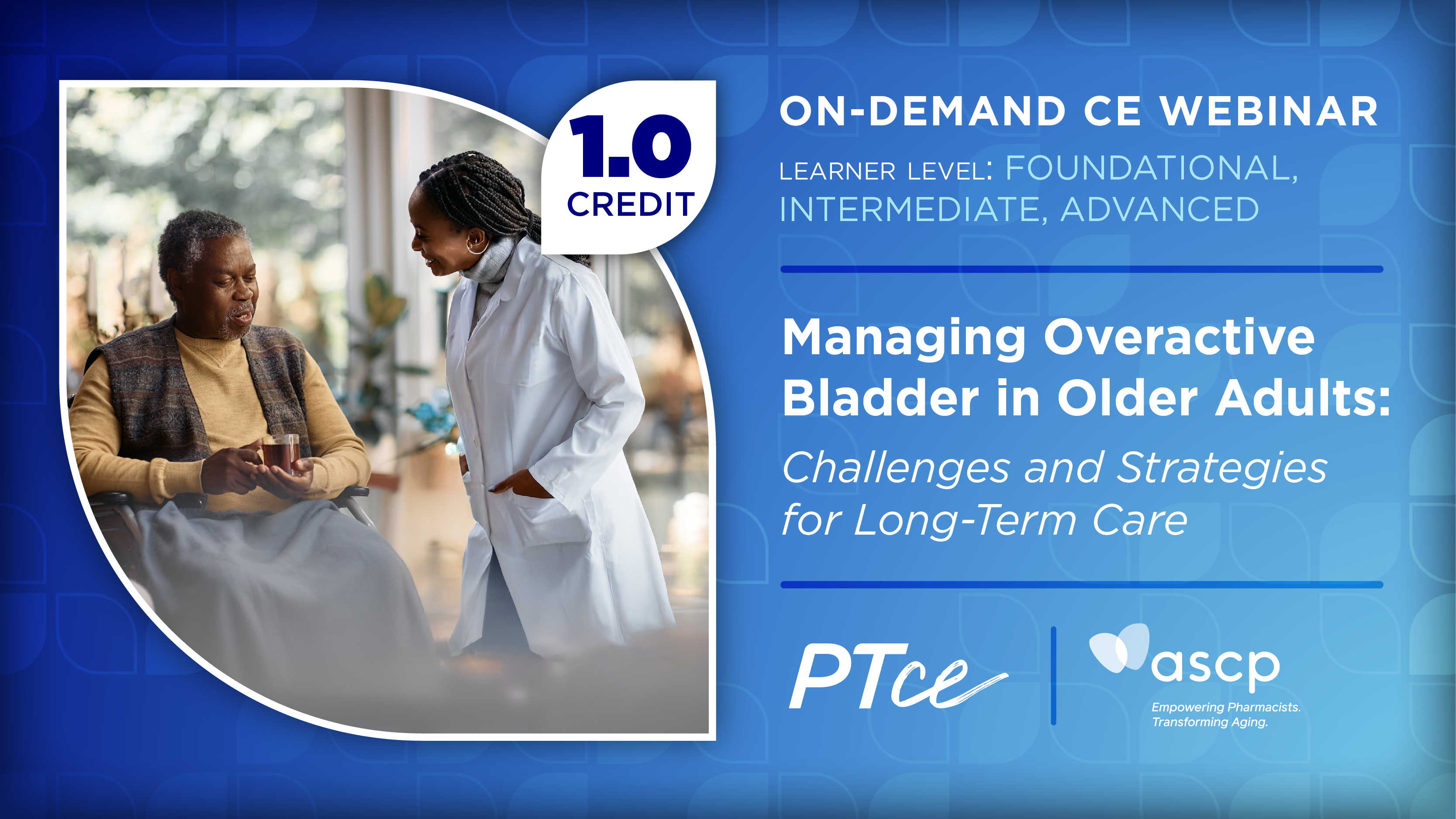
Overactive bladder (OAB) is a chronic condition defined as urinary urgency, frequency, and nocturia without the presence of an infection or other identified diagnosis that affects around 16.5% of the US population. As OAB has become more common in the aging population, it is important for pharmacists, specifically those in long-term care, to be able to recognize the symptoms and understand the differences between OAB and other disease states with similar presentations, such as benign prostatic hyperplasia (BPH). This webinar will review the pathophysiology, symptoms, and burden of untreated OAB and BPH in long-term care facilities. While antimuscarinics or anticholinergics have historically been used for treatment, these therapies often increase the risk of cognitive impairment, dementia, and falls in older adults. This webinar will explore advancements in therapies, with a focus on evidence for the use of beta-3 adrenergic agonists, as these agents have a favorable adverse effect profile. Guideline recommendations will be a focus of the discussion to support long-term care pharmacists in making informed, evidence-based treatment decisions for older adult patients with OAB and BPH.
Target audience: Ambulatory Care Pharmacist, Community Pharmacist, Consultant Pharmacist, Retail Pharmacist
Type of activity: Application
Release date: November 25, 2025
Expiration date: November 25, 2026
Time to complete activity: 1.0 hours
Learner level: Foundational, Intermediate, Advanced
Fee: Free
Educational Objectives
At the completion of this activity, participants will be able to:
- Explain the symptoms and differences between overactive bladder (OAB) and benign prostatic hyperplasia and their impact on patient quality of life and health outcomes
- Identify limitations of older therapies for OAB and data supporting the efficacy and safety of newer and emerging treatments when consulting with the long-term care team
- Personalize patient care by applying knowledge about the range of therapeutic options, supporting decision-making and consulting with other clinicians to improve patient outcomes for those with OAB
GET STARTED WITH THIS PROGRAM:
Register now to gain access to this program.
Create AccountAlready Registered? Login Here