

Program Description
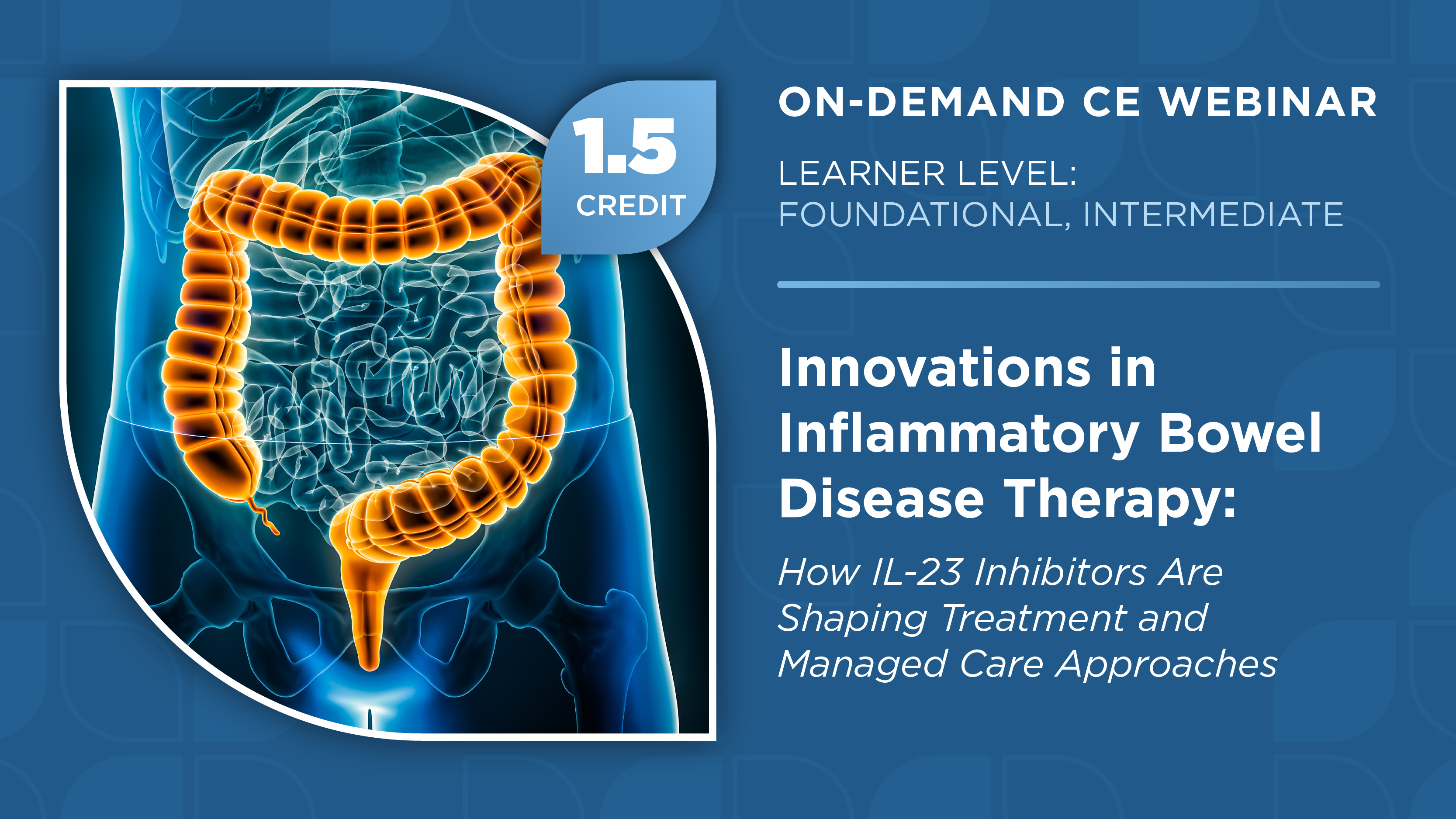
Inflammatory bowel disease (IBD), which includes ulcerative colitis (UC) and Crohn disease (CD), is characterized by chronic inflammation of the gastrointestinal tract. Patients with IBD often experience debilitating symptoms that contribute to significant clinical and economic burden. Clinical trial data have underscored the importance of objective endoscopic endpoints in determining long-term IBD control, but patients often experience barriers to care and suboptimal treatment outcomes. These limitations have driven the development of IL-23 inhibitors, which offer a targeted approach by selectively blocking the IL-23 pathway, a key driver of inflammation in IBD. This program will explore safety and efficacy data of IL-23 inhibitors, with a focus on their dosing flexibility and intravenous to subcutaneous administration transitions. The importance of a multidisciplinary care approach in IBD to address treatment access barriers will be highlighted. The discussion will also cover the economic impact of suboptimal therapy, cost-effective care strategies, and how specialty and managed care pharmacists can positively affect health care resource utilization.
Target audience: Managed Care Pharmacist, Specialty Pharmacist
Type of activity: Application
Release date: May 30, 2025
Expiration date: June 1, 2026
Time to complete activity: 1.5 hours
Learner level: Foundational, Intermediate
Fee: Free
Educational Objectives
At the completion of this activity, participants will be able to:
- Point out the current challenges in inflammatory bowel disease (IBD) management, including the limitations of existing therapies and the clinical burden
- Analyze the role of IL-23 inhibitors and the clinical data supporting their use in the management of ulcerative colitis and Crohn disease
- Identify strategies for integrating IL-23 inhibitors into patient-centered treatment plans for IBD
GET STARTED WITH THIS PROGRAM:
Register now to gain access to this program.
Create AccountAlready Registered? Login Here