
This activity was originally presented at Directions in Pharmacy 2025.
Program Description
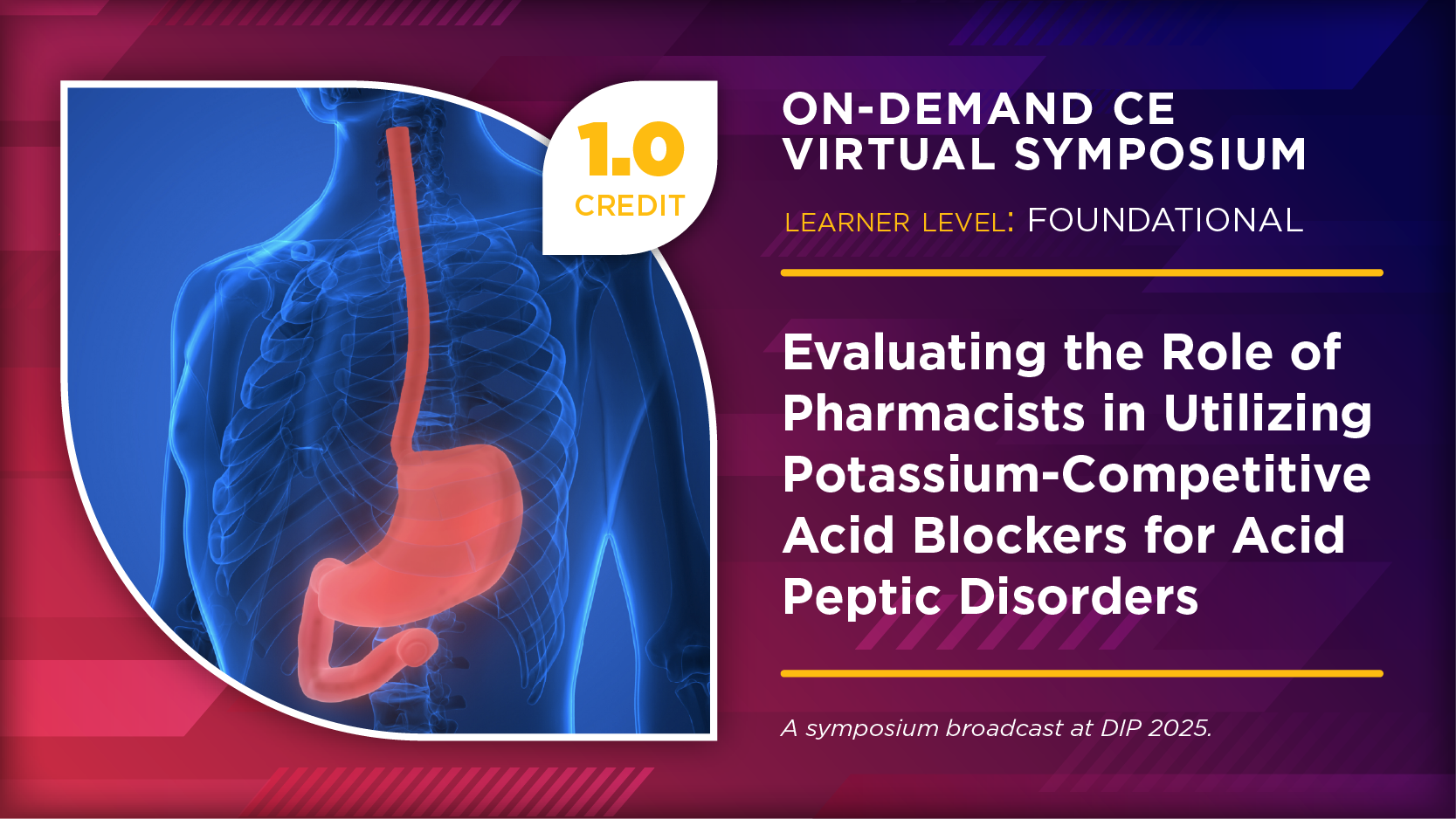
Gastric acid-related disorders, including gastroesophageal reflux disease (GERD), its subtypes, and related conditions like erosive esophagitis (EE), are becoming increasingly common in the United States. However, limitations of proton pump inhibitor (PPI) therapy have left patients with refractory disease and uncontrolled symptoms. Advances in therapy include the novel potassium-competitive acid blockers (PCABs) class, which have demonstrated efficacy and safety in acid-related disorders. Recent clinical trial results leading to the approval of and expanded indications for PCAB therapies will be discussed. Topics will include selecting appropriate therapies based on patient-specific factors, utilizing strategies for improving treatment adherence, and addressing adverse effects. The session will conclude by emphasizing the critical role of pharmacists across various practice settings.
Target audience: Community, retail, and health system pharmacists
Type of activity: Application
Release date: June 16, 2025
Expiration date: June 16, 2026
Time to complete activity: 1.0 hours
Learner level: Foundational
Fee: Free
Educational Objectives
At the completion of this activity, participants will be able to:
- Compare the pharmacologic mechanisms of proton pump inhibitors and potassium-competitive acid blockers (PCABs) in treating acid-related gastrointestinal conditions
- Analyze real-world treatment and clinical data to guide the selection and integration of PCABs into individualized treatment plans for acid-related disorders
- Identify best practices for pharmacists in optimizing the use of PCABs to improve patient outcomes in acid-related disease management
GET STARTED WITH THIS PROGRAM:
Register now to gain access to this program.
Create AccountAlready Registered? Login Here