
Program Description
Prostate cancer continues to be the most common malignancy among men and a
leading cause of cancer-related mortality, and it is estimated that more than 2
million new cancer cases will be diagnosed in the United States in 2026.
Historically, treatment has relied on a backbone of androgen deprivation
therapy, but the current treatment environment is increasingly defined by the
challenge of balancing high-potency systemic therapies with the management of
cumulative toxicities and resistance. Emerging strategies such as
radiopharmaceutical therapies, next-generation PARP inhibitors, and new
combinations for metastatic hormone-sensitive disease have significantly
improved progression-free survival. These options have expanded the treatment landscape and offer the advantage of precision targeting while
minimizing the off-target effects seen with traditional chemotherapy. Yet,
these therapeutic advances necessitate robust and continuous education to
ensure that community oncology pharmacists can navigate biomarker-driven
selection, monitor for nuanced adverse effects like cognitive impact, and
support patient adherence to oral regimens. Central to this program is a focus
on structured communication strategies with urologists and medical oncologists,
and this session will provide practical tools for standardized communication in
shared care plans to ensure consistency in toxicity reporting and refill
management.
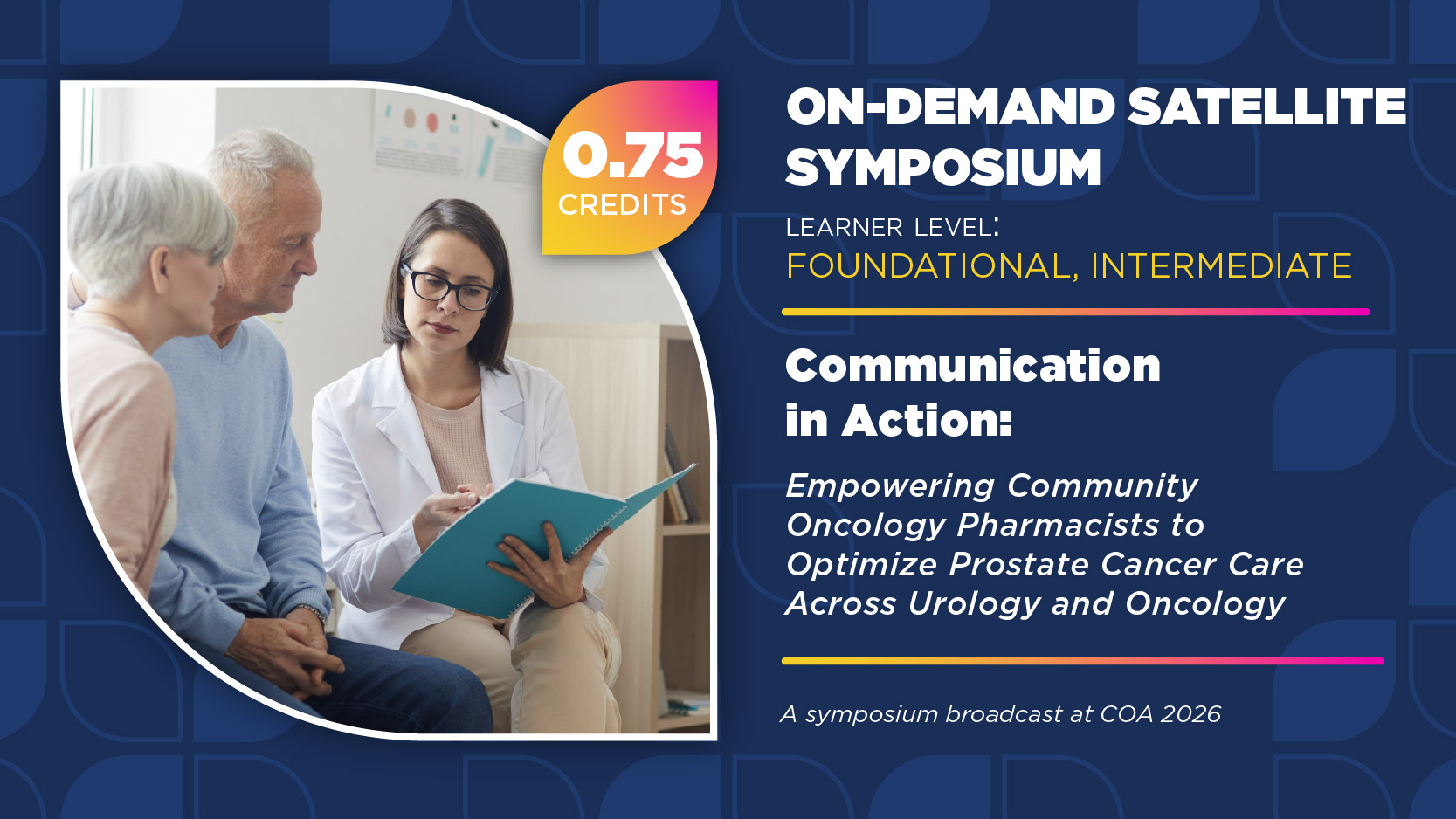
Target audience: Oncology pharmacists
Type of activity: Application
Release date: May 12, 2026
Expiration date: May 12, 2027
Learner level: Foundational, Intermediate
Time to complete activity: .75 hour
Fee: Free
Educational Objectives
At the completion of this activity, participants will be able to:
- Apply current guideline recommendations and recently approved therapies for prostate cancer across disease stages for evidence-based treatment selection and sequencing in community oncology practice
- Investigate evolving clinical evidence and emerging therapies in prostate cancer to guide treatment sequencing and support evidence-based decision-making by community oncology pharmacists
- Adapt structured communication strategies with urologists and medical oncologists to ensure coordinated, guideline-concordant prostate cancer care in the community oncology setting
GET STARTED WITH THIS PROGRAM:
Register now to gain access to this program.
Create AccountAlready Registered? Login Here