

This webinar is part 1 in a 3-part curriculum.
Program Description
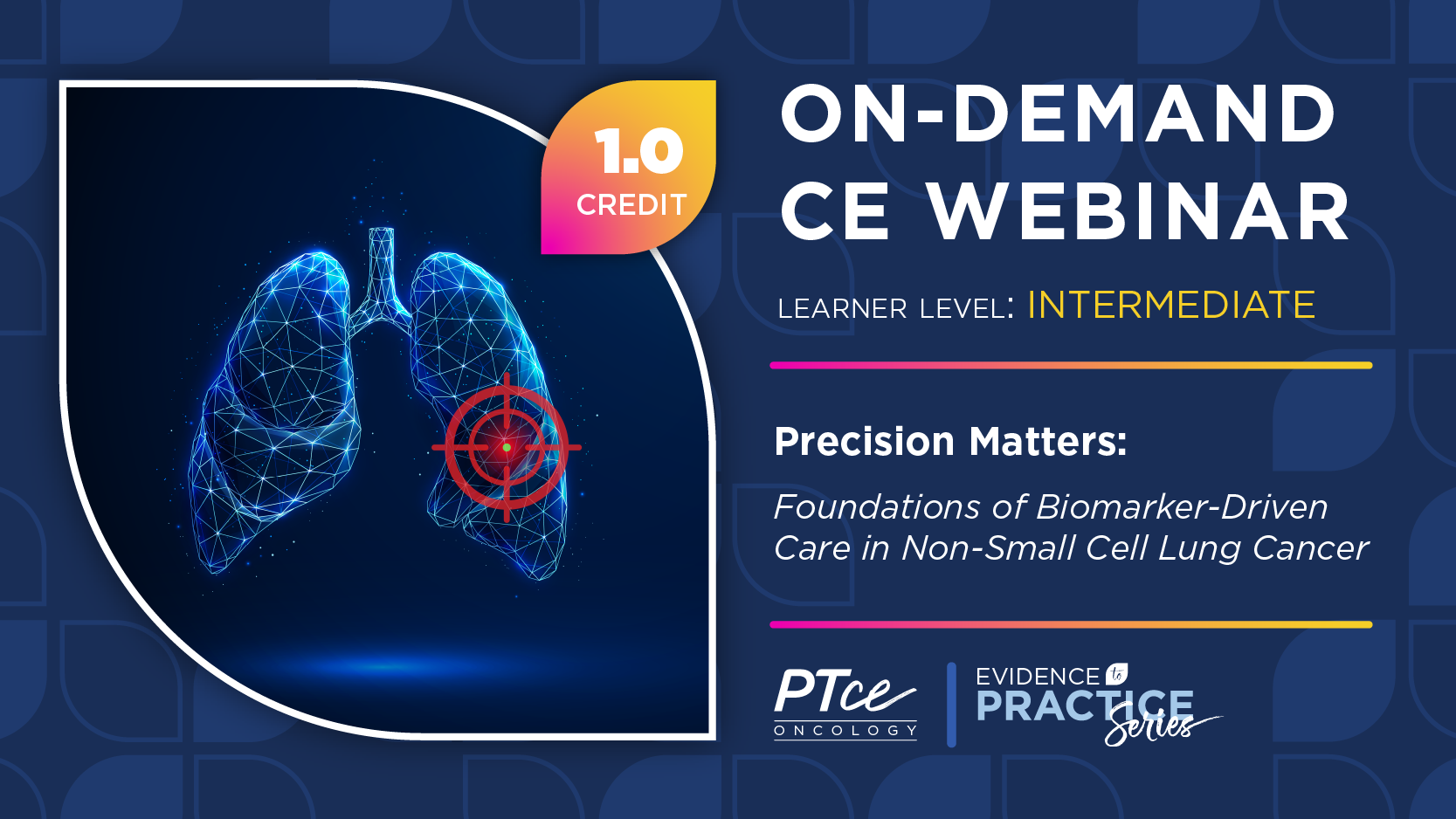
Non-small cell lung cancer (NSCLC) is the most common type of lung cancer, and
for many years, treatment options were primarily limited to surgery, radiation,
and cytotoxic chemotherapy. However, the advent of precision medicine, which
involves tailoring therapies to the specific genetic and molecular profile of a
patient's tumor, has led to improved survival outcomes. This webinar is the
first in a 3-part series exploring the evolving role of precision medicine in
NSCLC. In this webinar, attendees will become familiar with the impact of
precision medicine and different molecular testing methods used to identify
specific biomarkers in NSCLC. The discussion will center on the various
targetable mutations that drive NSCLC, exploring how the presence of these
biomarkers can guide treatment selection and improve efficacy. A key focus of
this session will be the clinical significance of these biomarkers, current
guideline recommendations for testing, and the critical importance of timely
and accurate testing as well as consequences of delayed or inaccurate testing
that oncology pharmacists can manage and mitigate in practice, including
suboptimal treatment choices, increased risk of toxicity, and reduced
therapeutic efficacy. This webinar will provide a crucial foundation for
understanding the subsequent components of the program, which will build on
these concepts to explore advanced topics in NSCLC treatment.
Target Audience: Oncology pharmacists
Type
of Activity: Application
Release date: October 10, 2025
Expiration date: October 10, 2026
Learner level: Intermediate
Time to complete activity: 1.0 hour
Fee: Free
Educational Objectives
At the completion of this activity, participants will be able to:
- Identify common and uncommon biomarkers in non-small cell lung cancer (NSCLC) and their clinical significance
- Interpret current guideline recommendations for biomarker, mutational, and genomic testing in NSCLC
- Examine how inaccurate or delayed biomarker testing can lead to suboptimal treatment selection, increased toxicity, and reduced efficacy

Darren Luon, PharmD, BCOP
Clinical Pharmacy Specialist, Medical Oncology
Yale New Haven Hospital
New Haven, CT

Pharmacy Times Continuing Education™ is accredited by the Accreditation Council for Pharmacy Education (ACPE) as a provider of continuing pharmacy education. This activity is approved for 1.0 contact hour (0.10 CEU) under the ACPE universal activity number 0290-0000-25-322-H01-P. The activity is available for CE credit through October 10, 2026.
Instructions for Completing the Activity and Receiving CPE Credit
To receive CPE credit, participants must complete the pretest, view the activity in its entirety, complete the posttest, and complete the online activity evaluation. After successful completion of the online activity evaluation, you can submit your credit to CPE Monitor. You may view your credit within 48 hours at www.mycpemonitor.net. All participants must request credit before the activity expiration date. CE credit will not be issued after this date.
Disclosures
The following contributors have no relevant financial relationships with ineligible companies to disclose:
Faculty
Darren Luon, PharmD, BCOP
Pharmacy Times Continuing Education™ Planning Staff—Jim Palatine, RPh, MBA; Amy L. Morris, PharmD, BCOP; Crissy Wilson; Susan Pordon; Brianna Winters; and Chloe Taccetta have no relevant financial relationships with ineligible companies to disclose.
Any relevant financial relationships listed for these individuals have been mitigated.
At least one anonymous peer reviewer was used as part of content validation and conflict resolution. The peer reviewer has no relevant financial relationships with ineligible companies to disclose.
Educational Disclaimer
CPE activities are offered solely for educational purposes and do not
constitute any form of professional advice or referral. Discussions concerning
drugs, dosages, and procedures may reflect the clinical experience of the
author(s) or they may be derived from the professional literature or other
sources and may suggest uses that are investigational in nature and not
approved labeling or indications. Participants are encouraged to refer to
primary references or full prescribing information resources.
For questions about this internet CPE activity, please contact:
ceinfo@pharmacytimes.com
Privacy Policy and Terms of Use Information:
www.pharmacytimes.org/terms
GET STARTED WITH THIS PROGRAM:
Register now to gain access to this program.
Create AccountAlready Registered? Login Here