

Program Description
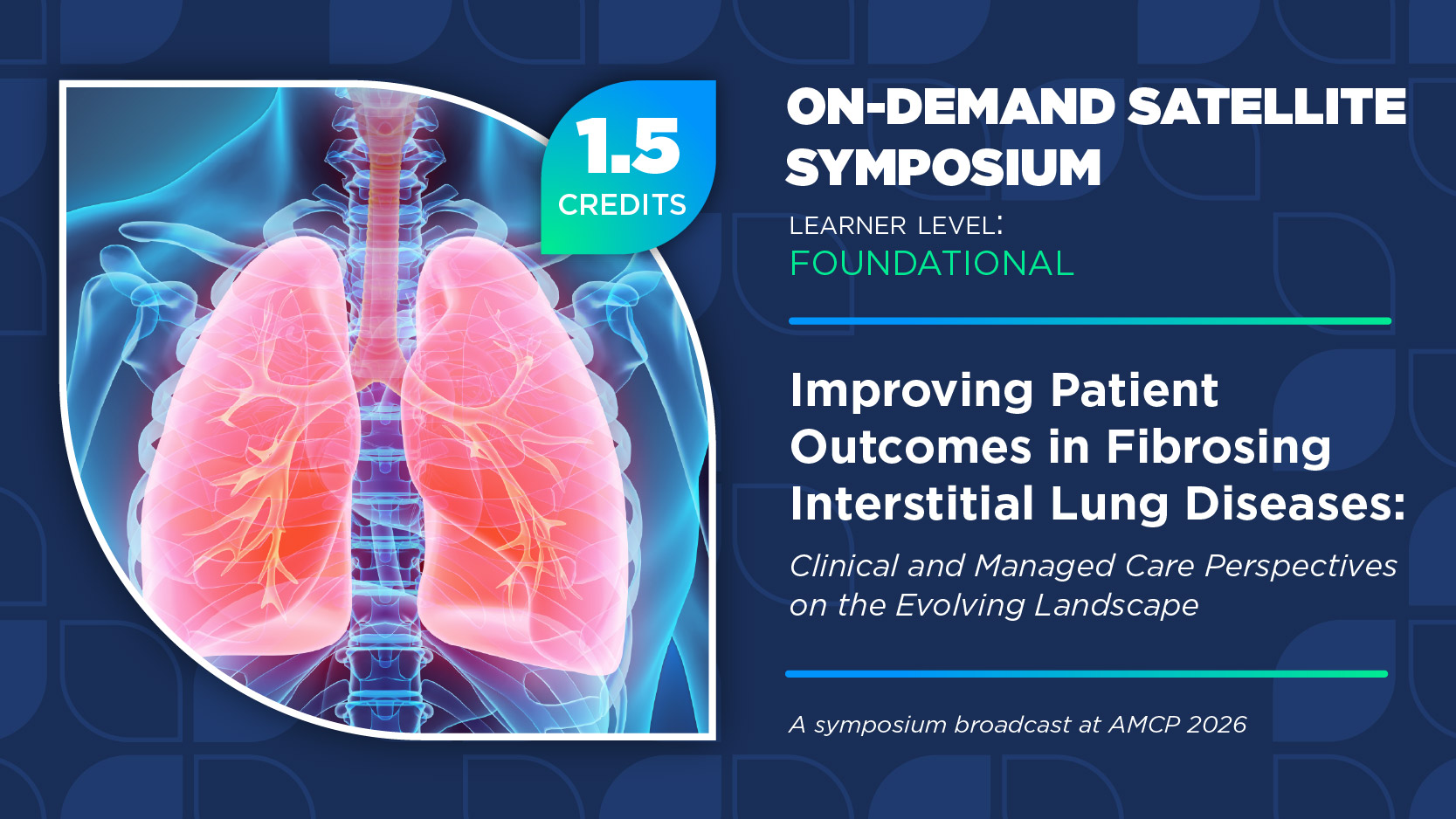
Fibrosing interstitial lung disease (F-ILD) encompasses a number of conditions
characterized by common features, including fibrotic lung tissue, chronic
cough, and breathlessness. The two primary categories are idiopathic pulmonary
fibrosis (IPF), the most common form, and progressive pulmonary fibrosis (PPF),
such as chronic hypersensitivity pneumonitis or connective tissue disease.
These diseases both have poor clinical prognoses and represent a major clinical
challenge because the loss of lung function is irreversible, leading to severe
disability, high morbidity, and mortality. The current goal of therapy with
antifibrotics is to slow disease progression rather than reverse existing
damage, but gaps in care persist due to diagnostic delays and high discontinuation
rates. New therapies under investigation have demonstrated the potential to
provide options with novel mechanisms of action and potentially fewer systemic
adverse effects. This session will detail the pathophysiology and clinical
burden of F-ILDs, while differentiating between IPF and PPF. Clinical experts
will present recent data for approved and late-stage emerging therapies
alongside evidence-based guidelines that prioritize early treatment initiation.
Additionally, the session will focus on strategies managed care professionals
and pharmacists can apply to address the economic burden and access barriers of
F-ILDs. As clinical data for these emerging therapies continues to become
available, managed care professionals and pharmacists must ensure that
formulary placement and prior authorization criteria are aligned with the
latest evidence.
Target audience: Managed care pharmacists
Type of activity: Foundational
Release date: April 30, 2026
Expiration date: April 30, 2027
Learner level: Foundational
Time to complete activity: 1.5 hour
Fee: Free
Educational Objectives
At the completion of this activity, participants will be able to:
- Explain the pathophysiology and clinical burden of fibrosing interstitial lung diseases (F-ILDs), differentiating idiopathic pulmonary fibrosis (IPF) from progressive pulmonary fibrosis (PPF).
- Interpret recent clinical data for currently approved and emerging antifibrotic pharmacologic therapies for F-ILDs to compare their potential impact on clinical care.
- Apply best practices and evolving treatment guidelines to facilitate evidence-based management for patients with F-ILDs.
- Illustrate the clinical, financial, and treatment burden of F-ILDs and how managed care professionals can support appropriate access to timely interventions to mitigate these challenges.

Timothy Clifford, PharmD
Associate Adjunct Professor, Pharmacy & Surgery
Department of Pharmacy Practice & Science
University of Kentucky College of Pharmacy
Lexington, KY
Clinical Pharmacist, Pulmonary Specialty Clinic
Division of Pulmonary, Critical Care, & Sleep Medicine
UK HealthCare
Lexington, KY

Rachael Prusi, PharmD, MSGH
Director, Specialty Clinical Solutions
Prime Therapeutics
Marquette, MI

Accreditation
Pharmacy Times Continuing Education™ is accredited by the Accreditation Council for Pharmacy Education (ACPE) as a provider of continuing pharmacy education. This activity is approved for 1.5 contact hours (0.15 CEU) under the ACPE universal activity number 0290-0000-26-096-H01-P. The activity is available for CE credit through April 30, 2027.
Instructions for Completing the Activity and Receiving CPE Credit
To receive CPE credit, participants must complete the pretest, view the activity in its entirety, complete the posttest, and complete the online activity evaluation. After successful completion of the online activity evaluation, you can submit your credit to CPE Monitor. You may view your credit within 48 hours at www.mycpemonitor.net. All participants must request credit before the activity expiration date. CE credit will not be issued after this date.
Faculty
Rachael Prusi, PharmD, MSGHhas the following relevant financial relationships with ineligible companies to disclose:
Employee of PBM:
Prime Therapeutics, Director of Clinical Solutions
The following contributors have no relevant financial relationships with ineligible companies to disclose:
Faculty
Timothy Clifford, PharmD
Pharmacy Times Continuing Education™ Planning Staff—Jim Palatine, RPh, MBA; Dipti Desai, PharmD, MBA, CHCP; Liza Patel, PharmD, RPh; Rose Buszka, PharmD, BCPS, CHCP; Adam C Welch, PharmD, MBA, FAPhA; Amy L. Morris, PharmD, BCOP; Daphne Davis, PharmD, BCOP; Crissy Wilson; Susan Pordon; Brianna Winters; and Chloe Taccetta
Any relevant financial relationships listed for these individuals have been mitigated.
At least one anonymous peer reviewer was used as part of content validation and conflict resolution. The peer reviewer has no relevant financial relationships with ineligible companies to disclose.
Educational Disclaimer
Continuing professional education activities are offered solely for educational purposes and do not constitute any form of professional advice or referral. Discussions concerning drugs, dosages, and procedures may reflect the clinical experience of the author(s) or be derived from the professional literature or other sources and may suggest uses that are investigational in nature and not approved by the labeling or indications. Participants are encouraged to refer to primary references or full prescribing information resources.
For questions about this internet CPE activity, please contact:
ceinfo@pharmacytimes.com
Privacy Policy and Terms of Use Information:
www.pharmacytimes.org/terms
GET STARTED WITH THIS PROGRAM:
Register now to gain access to this program.
Create AccountAlready Registered? Login Here